
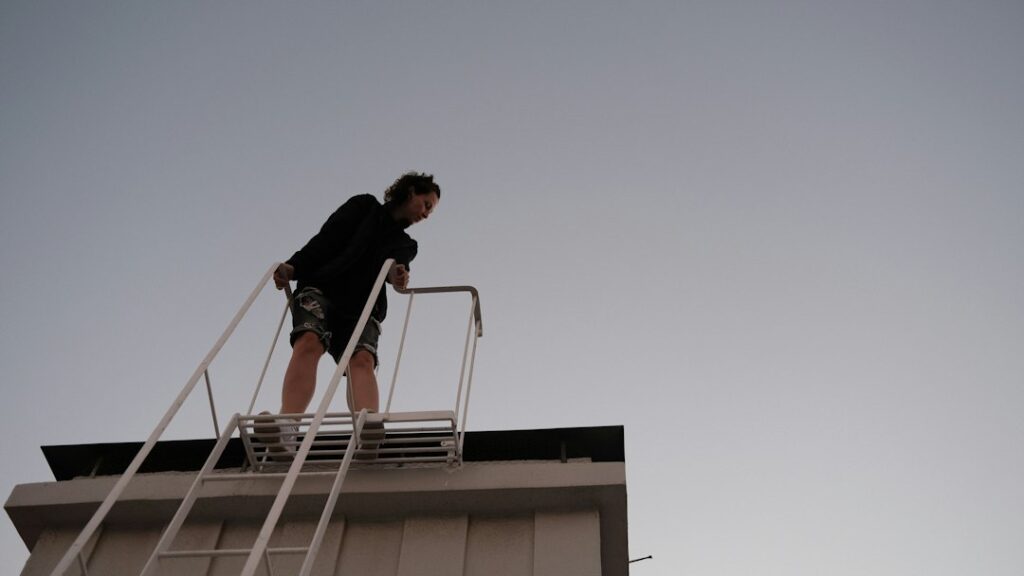
Roof repairs are sometimes manageable for a careful homeowner, but the work is only safe when the roof, weather, tools, and task are all within reasonable limits. On many homes, the safest do-it-yourself work happens from the ground or from a properly positioned ladder—not while walking across the roof.
In Spencerport, seasonal weather adds another concern. Snow, freezing temperatures, wind, rain, and rapid spring thaw can make a roof surface unpredictable even when it looks only slightly damp.
What roof work can a homeowner usually do safely?
Low-risk maintenance is generally limited to tasks that do not require walking on a steep, elevated, damaged, or slippery roof. Examples include:
- Cleaning leaves from ground-level gutters with an extension tool
- Checking attic areas for damp insulation, daylight, or water stains
- Looking for missing shingles from the yard or a nearby window
- Trimming branches that touch or overhang the roof, provided the cutting itself is safe
- Replacing a damaged vent cap or flashing component only when it can be reached securely without stepping onto the roof
- Clearing small amounts of debris from a low-slope roof while using stable access and suitable fall protection
A small patch on a one-story, low-slope roof may be within the ability of an experienced homeowner. Even then, the repair should be postponed if the roof covering is wet, icy, brittle, loose, or visibly sagging.
The key question is not simply whether the repair looks easy. It is whether the entire task can be completed without creating a fall hazard or damaging the roof further.
When should you stay off the roof?
Stay off the roof when any of the following conditions exist:
- Snow, frost, ice, rain, or heavy dew is present
- Wind could affect balance, ladders, materials, or loose roofing
- The roof has a steep pitch or multiple levels
- Shingles are brittle, curling, cracked, or covered with moss
- The roof deck feels soft or spongy
- There are sagging areas, exposed underlayment, or large openings
- Power lines are near the work area
- A ladder cannot rest on firm, level ground
- You would need to carry bulky materials while climbing
- You feel unsteady at height or lack a second person on the ground
A roof can remain dangerously slick after the visible moisture has disappeared. In colder months, shaded slopes may hold frost or ice long after sunlit areas have dried. During warmer weather, asphalt shingles can become soft and lose their surface granules, making them easier to damage.
How high is too high for DIY roof work?
There is no single height that makes a roof automatically unsafe for every person, but the risk rises sharply once a fall could cause serious injury. Residential construction fall-protection rules generally treat work six feet or more above a lower level as requiring protective measures such as guardrails, safety nets, or a properly designed personal fall-arrest system.
That standard should be treated as a serious safety warning for homeowners. A short roof edge is still high enough to cause broken bones, head injuries, or worse. A ladder alone does not provide fall protection while stepping onto or working from the roof.
If a task requires a harness, roof anchor, guardrail, scaffold, or specialized access equipment, using that equipment correctly matters as much as owning it. An improperly installed anchor can fail, and a harness can create additional danger if there is no plan for preventing a swing fall or rescuing someone after a fall.
Is ladder work safer than walking on the roof?
Ladders are often safer than roof travel, but they are not automatically safe. Set the ladder on solid, level ground, keep the feet clear of snow and mud, and maintain three points of contact while climbing. The ladder should extend above the roof edge enough to provide a secure handhold when stepping off or returning.
Avoid placing a ladder on ice, wet grass, uneven ground, decks with loose boards, or makeshift supports. Do not move a ladder while standing on it. Keep tools in a belt or hoist them after climbing rather than carrying them in your hands.
A second person should stabilize the ladder and keep children, pets, and foot traffic away from the work zone. If the ladder must be placed near overhead electrical lines, do not proceed.
What roof repairs are poor choices for do-it-yourself work?
Some repairs require more than replacing a visible shingle. They may involve hidden structural damage, water management, ventilation, or code requirements. Avoid DIY work when the project includes:
- Replacing large sections of roofing
- Repairing roof decking, rafters, or trusses
- Working around skylights, chimneys, or complex valleys
- Correcting widespread leaks
- Replacing low-slope membrane roofing
- Installing roof-mounted equipment
- Repairing storm damage near electrical wiring
- Working on a roof with visible sagging
- Removing ice dams from the roof surface
- Handling materials that require rooftop hoisting

A leak visible inside one room may originate several feet away from the stain. Water can travel along decking, rafters, insulation, or ventilation channels before entering the ceiling. Covering the visible spot without finding the entry point often delays the problem rather than fixing it.
What weather conditions are safest?
Dry, calm, mild weather is generally the safest window for exterior roof work. The roof should be completely free of frost, ice, and wetness, and the forecast should allow enough time to finish the repair and secure materials.
Avoid beginning work shortly before rain, strong wind, or a sharp temperature change. In this region, late fall and winter conditions can change quickly. Snow that appears light from the ground may conceal ice beneath it, while thawing temperatures can create slick runoff around roof edges and ladders.
Summer heat also deserves attention. Very hot shingles can soften, and prolonged sun exposure can contribute to dehydration, dizziness, and poor judgment. Early-day work may be safer than working during the hottest part of the afternoon, but only if the roof is dry.
What should be checked before attempting a small repair?
Before climbing, inspect the project from the ground and ask:
- Can the repair be completed without stepping near an edge?
- Is the roof surface dry, firm, and in good condition?
- Can the ladder be placed securely?
- Are power lines, tree limbs, or nearby structures hazards?
- Can tools and materials be handled without losing balance?
- Is another adult available to monitor the ladder and work area?
- Do you understand how water is supposed to flow through the repair?
- Can the area be protected if the repair cannot be completed the same day?
If any answer is uncertain, the project is not a good candidate for casual DIY work. A temporary ground-level measure, such as protecting belongings from an interior leak, may be safer than attempting an emergency roof repair during bad weather.
When is it time to stop?
Stop immediately if the roof shifts, the ladder moves, footing becomes uncertain, wind increases, shingles begin breaking, or hidden damage appears. Also stop if you are tired, distracted, overheated, or rushing to finish before dark.
Roof work is safe to do yourself only when the task is limited, the surface is stable, the weather is favorable, and fall protection is genuinely controlled. For many homes, inspecting from the ground, documenting damage, and handling minor maintenance are reasonable. Walking onto a steep, wet, icy, damaged, or elevated roof is a different category of risk and should not be treated as an ordinary household chore.
